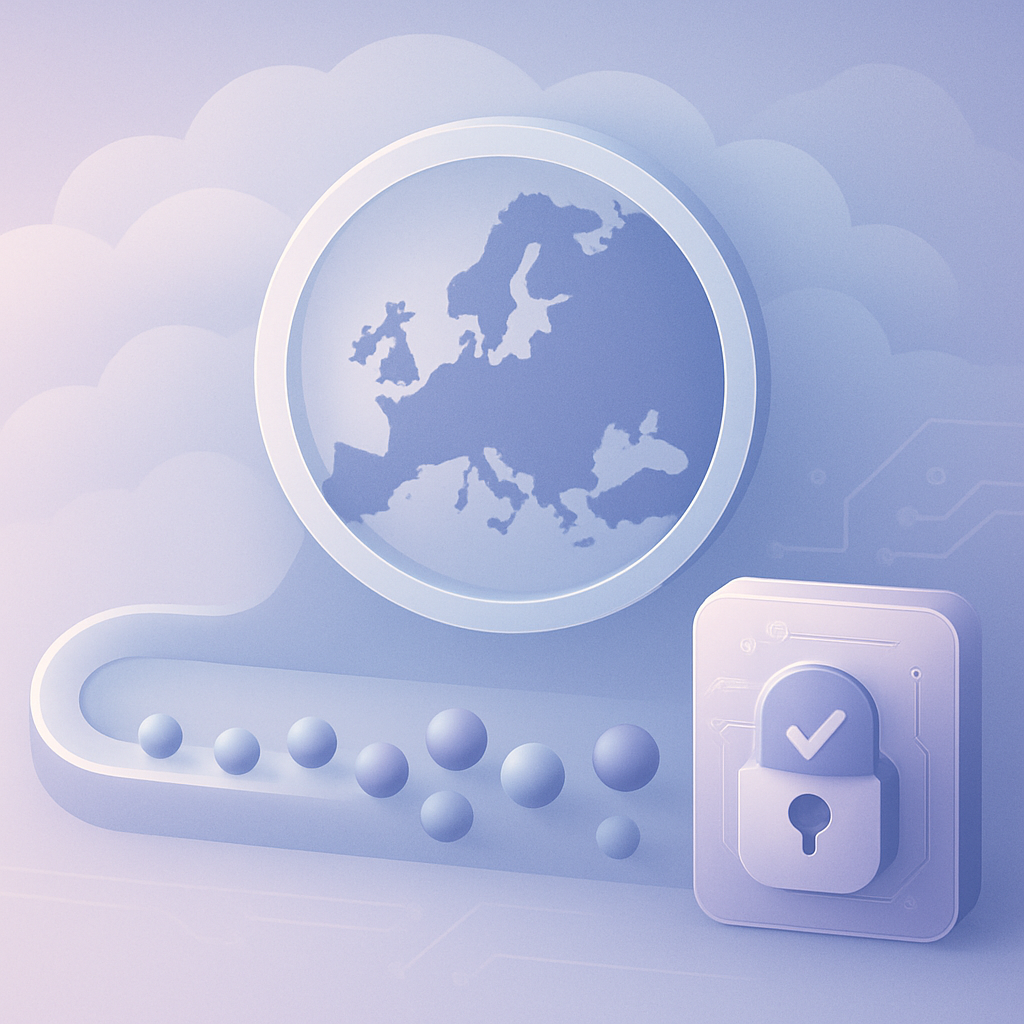
Sovereign Cloud is having a moment in Europe - especially in Germany. Hyperscalers are rolling out EU- and country-aligned cloud offerings, buyers are tightening requirements, and security teams are being asked a deceptively simple question:
“Can you prove this workload is sovereign?”
Here’s the uncomfortable truth:
Even if your cloud region is sovereign, your software stack often isn’t.
And that’s exactly where SBOM management stops being a compliance checkbox and becomes a strategic control.
What “Sovereign Cloud” really means (in practice)
Most sovereignty programs aren’t about one thing. They’re a bundle of requirements, typically across:
-
Data residency: where data is stored and processed
-
Administrative sovereignty: who can access systems and operate them
-
Encryption & key control: who controls keys and access enforcement
-
Auditability: whether you can demonstrate controls consistently
If your org is regulated - or sells into regulated markets - sovereignty quickly turns into an evidence problem. Policies are easy to write. Proving reality is harder.
The sovereignty blind spot: software provenance
Sovereign Cloud initiatives focus heavily on where workloads run and who can access the infrastructure.
But modern applications are built from thousands of building blocks:
-
open-source dependencies and transitive dependencies
-
container base images and package registries
-
build tools, CI/CD pipelines, plugins, and extensions
-
third-party libraries and commercial components
So you can absolutely have:
✅ EU region
✅ EU operations boundary
✅ customer-managed keys
✅ strong cloud controls
…and still deploy software that includes components you can’t confidently explain, justify, or trace.
Sovereign infrastructure does not automatically equal sovereign software.
Why this matters now: sovereignty creates more scrutiny, not less
When organizations adopt Sovereign Cloud, two things happen immediately:
-
More stakeholders need answers
Security, compliance, legal, procurement, risk, auditors—everyone suddenly cares about what’s inside the stack.
-
Exceptions multiply
Country-specific boundaries, “approved” services, restricted environments, and special supplier rules create complexity fast.
That’s when the questions shift from “Are we in the right region?” to:
-
“What’s deployed in production right now?”
-
“Which components are inside this application?”
-
“Where do they come from?”
-
“Who maintains them?”
-
“Which vulnerabilities and licenses apply?”
-
“What changed since last release?”
-
“Can we prove this consistently - without heroics?”
Most teams can’t answer those questions quickly. Not because they’re careless—because their tooling isn’t built for evidence at scale.
SBOMs: the evidence layer sovereignty is missing
An SBOM (Software Bill of Materials) is the cleanest way to turn “we believe” into “we can prove.”
A strong SBOM practice gives you a continuously updated view of:
-
what components are included
-
which versions are deployed
-
how components entered your software (source, build, dependency chain)
-
what risk is attached (vulnerabilities, license obligations, geo-risk)
-
what changed release-to-release
In sovereignty programs, SBOMs become the connective tissue between:
Put simply: Sovereign Cloud needs sovereign visibility into the software supply chain.
The real-world SBOM problem: it’s not just “generate a file”
Most organizations don’t fail because they can’t create an SBOM once.
They fail because they can’t operationalize SBOMs across teams and suppliers:
-
SBOMs come in different formats and inconsistent quality
-
suppliers send incomplete data (or none at all)
-
sharing happens via email or ad-hoc portals
-
there’s no reliable audit trail of who received what and when
-
evidence goes stale the moment you ship the next release
That’s why SBOM management matters. It’s the difference between “we have SBOMs” and “we can run governance on SBOMs.”
A sovereignty-ready SBOM playbook
If you’re building - or buying - under EU/Germany sovereignty expectations, this is the playbook that holds up under pressure:
1) Define your sovereignty boundary
Data residency is the easy part. Administrative access, operational separation, and legal exposure are where sovereignty becomes real. Document what you must prove.
2) Classify your software portfolio
Not every workload needs the same depth. Start with crown-jewel systems and regulated products, then scale.
3) Make SBOMs a supplier requirement
Treat SBOMs like security attestations. Define format expectations, update cadence, and minimum completeness.
4) Automate SBOM collection in CI/CD
If it’s manual, it won’t survive continuous delivery. Evidence needs to be generated and updated continuously.
5) Enforce quality gates
An SBOM that misses transitive dependencies or key metadata isn’t “done” - it’s risk-shaped. Validate quality, don’t just store files.
6) Centralize, control, and audit
You need a single source of truth: access controls, version history, secure exchange, and a defensible audit trail.
The bottom line
Sovereign Cloud helps you control the environment.
SBOM management helps you control the reality running inside it.
If you can’t prove what your software is made of - across suppliers, products, and releases - then sovereignty becomes a branding exercise instead of a defensible security posture.
The strongest sovereignty strategies converge on one conclusion:
You don’t have sovereign cloud without sovereign visibility into your software supply chain.
Want to see what this looks like in practice?
If you’re evaluating Sovereign Cloud requirements or need SBOM evidence across suppliers and internal products, we’re happy to compare notes and show how SBOM management can become a lightweight, continuous “proof layer” for sovereignty, compliance, and security.